“A is A.” - Aristotle
“What reason shows to be true is absolutely true, so that the opposite is absolutely false and impossible.” – Thomas Aquinas
From Ayn Rand’s Objectivism: Reason is the faculty that deals with the perception of reality. Reason organizes perceptual units in conceptual terms by following the principles of logic. Logic is noncontradictory identification within the full context of one’s knowledge.
Reason is the existence-oriented faculty. It is the faculty of proof. Reason is the human faculty which forms concepts by a process of logic based on the evidence of the senses. Reason is our means of gaining knowledge of this world and guiding our actions in it.
From Thomas Jefferson:
"Your own reason is the only oracle given you by heaven…. Man once surrendering his reason, has no remaining guard against absurdities the most monstrous, and like a ship without rudder, is the sport of every wind."
"Shake off all the fears & servile prejudices, under which weak minds are servilely crouched. Fix reason firmly in her seat, and call to her tribunal every fact, every opinion. Question with boldness even the existence of a God; because, if there be one, he must more approve of the homage of reason, than that of blindfolded fear…. It is an insult to our citizens to question whether they are rational beings or not, and blasphemy against religion to suppose it cannot stand the test of truth and reason.”
"It is comfortable to see the standard of reason at length erected, after so many ages, during which the human mind has been held in vassalage by kings, priests, and nobles; and it is honorable for us to have produced the first legislature who had the courage to declare that the reason of man may be trusted with the formation of his own opinions."
"I never submitted the whole system of my opinions to the creed of any party of men whatever in religion, in philosophy, in politics, or in anything else where I was capable of thinking for myself. Such an addiction is the last degradation of a free and moral agent."
"I am not myself apt to be alarmed at innovations recommended by reason. That dread belongs to those whose interests or prejudices shrink from the advance of truth and science."
"Instead of that liberty which takes root and growth in the progress of reason, if recovered by mere force or accident, it becomes with an unprepared people a tyranny still of the many, the few, or the one."
Other quotes:
“Reason obeys itself and ignorance submits to whatever is dictated to it.” - Thomas Paine
"Government is not reason; it is not eloquent; it is force. Like fire, it is a dangerous servant and a fearful master." - George Washington
"When I disagree with a rational man, I let reality be our final arbiter; if I am right, he will learn; if I am wrong, I will; one of us will win, but both will profit." - Ayn Rand
From Reason Reigns:
Heaven on Earth can be achieved when reason reigns.
Men of reason stand for freedom. They do not rule, nor can they be ruled by men because they are ruled by reason.
Independent thinkers cannot be ruled, so die they must. Between tyrants who crave to rule and thinkers who cannot be ruled, once again, the battle is joined.
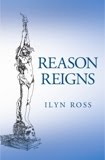
On the book’s front cover is a sculpture of a naked woman triumphantly raising a torch, arms stretched high above her head, body straight and proud, feet firmly atop a skull over a thick book. Showing man’s goodness and efficacy, the sculpture represents the values depicted in Reason Reigns. The woman’s exalted pose is a salute to man’s intellectual and creative power. The sculpture is entitled: The Power of Science over Death. The sculptor, Dr. Jose Rizal, a polymath and polyglot, was executed by tyrants at age 35.
Excerpt:
The islanders were all ears as Ron solemnly addressed them.
“Reason is the faculty that deals with the perception of reality, while faith is the claim to a non-sensory means of knowledge. Principles and values derived from faith are often accepted without question even in the face of contrary evidence, while reason deals with facts and employs the method of non-contradictory identification.
Faith has been used to further ignorance, enshrine irrationality, and exploit people. With faith, there is no necessity for justification. Force is its corollary.
But if one's personal faith holds reason as its top value, then, faith and reason are not incompatible. If one's personal faith holds the life, freedom, and happiness of each human being as the most sacred of values, then, reason and faith can coexist, parallel to each other, in the same man.
This man uses reason for everything that can be explained, while his faith holds on to dreams that inspire him to live.
Faith in a God who is all-good and all-loving, who treasures each man, endowing him with a mind capable of understanding man's nature, the Earth, and the universe.
Faith in a God who so loves man that He respects his freedom of choice.
Faith that God shares the most sacrosanct of values: each man's life, his freedom, and his happiness here on Earth. Faith that Heaven and Earth are one and the same.
Faith that human life goes on until eternity, that everything is possible to man. Faith in miracles -
Think of a miracle. Believe that God has given the means to achieve it. Think, and find out the facts. Think, with the clarity of purpose. Let the vision of a miracle be a beacon to guide your actions. Think, and then act. Act with the confidence that miracles do happen to doers who strive to actualize them.
Rejoice! Angels do exist in our midst, though it takes the highest of virtues to recognize them.
Heaven on Earth can be achieved when reason reigns."
Alisa gazed at Ron adoringly. “A good man,” she thought. “His mind matches his looks.” Ron was six feet and three inches tall. He was proud and joyously confident.
Ron continued, “I respect the freedom of each man to celebrate the holy month, but I do not hold humility as a virtue. I think self-sacrifice is evil, suffering has no value, and one’s own happiness is the purpose of life.”
http://www.reasonreigns.com/Welcome.php
From Royal Serf:
Thomas Jefferson said: “Reason and persuasion are the only practicable instruments.” To remove the use of force from citizen interactions so that individuals may deal with each other only by reason and persuasion, citizens delegate their right to self-defense to their government. Citizens cannot delegate a right they do not possess – hence, the government has no right to regulate inherent inalienable Rights, including the rights of individuals who hold that selfishness is a virtue.
Excerpt:
Many voters, specially the young, pondered political principles. An eighteen-year-old student and babysitter was with a first grader and a kindergartner.
“Who gets your vote for president?” the first grader asked the babysitter.
“Apollo Marianto.”
“Why?”
“Because he stands for reason and rights.”
“What is reason?” the kindergartner asked.
“Reason is the human faculty which forms concepts by a process of logic based on the evidence of the senses. Reason is our means of gaining knowledge of this world and guiding our actions in it. Reason is not just for grownups. Would you like me to tell you a story about the ‘evidence of the senses’ and trusting one’s own rational faculty?”
“Yes.” The children chorused.
“The Emperor’s New Clothes by Hans Christian Andersen, written in 1837.
Many, many years ago lived an emperor, who thought so much of new clothes that he spent all his money in order to obtain them; his only ambition was to be always well dressed. He did not care for his soldiers, and the theatre did not amuse him; the only thing, in fact, he thought anything of was to drive out and show a new suit of clothes. He had a coat for every hour of the day; and as one would say of a king “He is in his cabinet,” so one could say of him, “The emperor is in his dressing room.”
The great city where he resided was very gay; every day many strangers from all parts of the globe arrived. One day two swindlers came to this city; they made people believe that they were weavers, and declared they could manufacture the finest cloth to be imagined. Their colours and patterns, they said, were not only exceptionally beautiful, but the clothes made of their material possessed the wonderful quality of being invisible to any man who was unfit for his office or unpardonably stupid.
“That must be wonderful cloth,” thought the emperor. “If I were to be dressed in a suit made of this cloth I should be able to find out which men in my empire were unfit for their places, and I could distinguish the clever from the stupid. I must have this cloth woven for me without delay.”
He gave a large sum of money to the swindlers, in advance, that they should set to work without any loss of time. They set up two looms, and pretended to be very hard at work, but they did nothing whatever on the looms. They asked for the finest silk and the most precious gold-cloth; all they got they did away with, and worked at the empty looms till late at night.
“I should very much like to know how they are getting on with the cloth,” thought the emperor. But he felt rather uneasy when he remembered that he who was not fit for his office could not see it. Personally, he was of opinion that he had nothing to fear, yet he thought it advisable to send somebody else first to see how matters stood. Everybody in the town knew what a remarkable quality the stuff possessed, and all were anxious to see how bad or stupid their neighbours were.
“I shall send my honest old minister to the weavers,” thought the emperor. “He can judge best how the stuff looks, for he is intelligent, and nobody understands his office better than he.”
The good old minister went into the room where the swindlers sat before the empty looms. “Heaven preserve us!” he thought, and opened his eyes wide, “I cannot see anything at all,” but he did not say so. Both swindlers requested him to come near, and asked him if he did not admire the exquisite pattern and the beautiful colours, pointing to the empty looms. The poor old minister tried his very best, but he could see nothing, for there was nothing to be seen. “Oh dear,” he thought, “can I be so stupid? I should never have thought so, and nobody must know it! Is it possible that I am not fit for my office? No, no, I cannot say that I was unable to see the cloth.”
“Now, have you got nothing to say?” said one of the swindlers, while he pretended to be busily weaving.
“Oh, it is very pretty, exceedingly beautiful,” replied the old minister looking through his glasses. “What a beautiful pattern, what brilliant colours! I shall tell the emperor that I like the cloth very much.”
“We are pleased to hear that,” said the two weavers, and described to him the colours and explained the curious pattern. The old minister listened attentively, that he might relate to the emperor what they said; and so he did.
Now the swindlers asked for more money, silk and gold-cloth, which they required for weaving. They kept everything for themselves, and not a thread came near the loom, but they continued, as hitherto, to work at the empty looms.
Soon afterwards the emperor sent another honest courtier to the weavers to see how they were getting on, and if the cloth was nearly finished. Like the old minister, he looked and looked but could see nothing, as there was nothing to be seen.
“Is it not a beautiful piece of cloth?” asked the two swindlers, showing and explaining the magnificent pattern, which, however, did not exist.
“I am not stupid,” said the man. “It is therefore my good appointment for which I am not fit. It is very strange, but I must not let any one know it;” and he praised the cloth, which he did not see, and expressed his joy at the beautiful colours and the fine pattern. “It is very excellent,” he said to the emperor.
Everybody in the whole town talked about the precious cloth. At last the emperor wished to see it himself, while it was still on the loom. With a number of courtiers, including the two who had already been there, he went to the two clever swindlers, who now worked as hard as they could, but without using any thread.
“Is it not magnificent?” said the two old statesmen who had been there before. “Your Majesty must admire the colours and the pattern.” And then they pointed to the empty looms, for they imagined the others could see the cloth.
“What is this?” thought the emperor, “I do not see anything at all. That is terrible! Am I stupid? Am I unfit to be emperor? That would indeed be the most dreadful thing that could happen to me.”
“Really,” he said, turning to the weavers, “your cloth has our most gracious approval;” and nodding contentedly he looked at the empty loom, for he did not like to say that he saw nothing. All his attendants, who were with him, looked and looked, and although they could not see anything more than the others, they said, like the emperor, “It is very beautiful.” And all advised him to wear the new magnificent clothes at a great procession which was soon to take place. “It is magnificent, beautiful, excellent,” one heard them say; everybody seemed to be delighted, and the emperor appointed the two swindlers “Imperial Court weavers.”
The whole night previous to the day on which the procession was to take place, the swindlers pretended to work, and burned more than sixteen candles. People should see that they were busy to finish the emperor’s new suit. They pretended to take the cloth from the loom, and worked about in the air with big scissors, and sewed with needles without thread, and said at last: “The emperor’s new suit is ready now.”
The emperor and all his barons then came to the hall; the swindlers held their arms up as if they held something in their hands and said: “These are the trousers!” “This is the coat!” and “Here is the cloak!” and so on. “They are all as light as a cobweb, and one must feel as if one had nothing at all upon the body; but that is just the beauty of them.”
“Indeed!” said all the courtiers; but they could not see anything, for there was nothing to be seen.
“Does it please your Majesty now to graciously undress,” said the swindlers, “that we may assist your Majesty in putting on the new suit before the large looking-glass?”
The emperor undressed, and the swindlers pretended to put the new suit upon him, one piece after another; and the emperor looked at himself in the glass from every side.
“How well they look! How well they fit!” said all. “What a beautiful pattern! What fine colours! That is a magnificent suit of clothes!”
The master of the ceremonies announced that the bearers of the canopy, which was to be carried in the procession, were ready.
“I am ready,” said the emperor. “Does not my suit fit me marvelously?” Then he turned once more to the looking-glass, that people should think he admired his garments.
The chamberlains, who were to carry the train, stretched their hands to the ground as if they lifted up a train, and pretended to hold something in their hands; they did not like people to know that they could not see anything.
The emperor marched in the procession under the beautiful canopy, and all who saw him in the street and out of the windows exclaimed: “Indeed, the emperor’s new suit is incomparable! What a long train he has! How well it fits him!” Nobody wished to let others know he saw nothing, for then he would have been unfit for his office or too stupid. Never emperor’s clothes were more admired.
“But he has nothing on at all,” said a little child at last.
“Good heavens! Listen to the voice of an innocent child,” said the father, and one whispered to the other what the child had said.
“But he has nothing on at all,” cried at last the whole people.
That made a deep impression upon the emperor, for it seemed to him that they were right; but he thought to himself, “Now I must bear up to the end.” And the chamberlains walked with still greater dignity, as if they carried the train which did not exist. – The End.”
“It’s a beautiful story, thank you,” said the first grader. “The child is honest.”
The kindergartner also thanked the babysitter. “The child told the truth.”
“Yes, the child is honest. It told the truth even when everyone was saying the contrary to the evidence of its eyesight.” The babysitter smiled at the children.
“Now I understand reason,” said the first grader. “I use it to know what’s real.”
The kindergartner held the babysitter’s hand. “You are voting for Mr. Marianto because he is for reason and what’s real, and he tells the truth like the child in the story?”
“Yes. He values reason, reality, and the truth. Many do not, like the emperor, his old minister, and his whole empire.”
“In the real world, what happens when grownups think and act like those in the story?”
“If there is freedom, it’s okay because there are people like Mr. Marianto. But if the people in government do not go by reality and truth, they stifle reason in many ways. Reason would be their enemy because it would expose their rackets. When people are conned into letting their government think for them, it is the end of freedom. The government has the monopoly on the use of force, that is, only the government can force others. It can force unreason on citizens.”
“Do we have freedom?” asked the first grader.
“We don’t have absolute freedom. Some can still speak out but we do not have property rights. The government can force us to pay any amount of taxes, even 90% of our income. Businessmen do not have rights at all. They create jobs but the government bashes them all the time and people who do not use reason vilify them at every turn.”
“Is that why many are going out of business and millions do not have jobs?”
“Yes.”
“But like the emperor, people in government do not admit that truth, do they?”
“Businessmen bashers do not, be they in or out of government. They think there will always be businessmen creating jobs and enduring being treated like slaves.”
“That’s contrary to reason.”
“You are right. If the government does not stop bashing businessmen, every goose that lays golden eggs will eventually die.”
“That is another good story you told us. Mr. Marianto must like businessmen.”
“He says they should be free like any individual. In freedom, individuals have equal inherent inalienable rights. Businessmen have been deprived of rights for more than a century.”
“Why? Aren’t many of them powerful?”
“They do not have the power to use force, remember? Only the government does. Good businessmen do not lobby the government to use force in their behalf.”
“Aren’t many of them rich and successful?”
“Many of them are. They become rich by using reason. People who revel in using force go at them because they are successful and because they respect reason, reality, and truth.”
The first grader looked earnest. “Everyone claims to love the poor. But one who claims so and bashes the rich is like the emperor and his people – such person is not using reason nor telling the truth.”
“Now I understand equal rights,” the kindergartner’s eyes lit up. “In freedom, the poor and the rich have equal rights. Please explain inherent and inalienable rights.”
“Rights are inborn. Mr. Marianto and Prime Minister Prince George explained that the source of rights is not the Declaration of Independence nor the Constitution. This means that man-made laws are not the source of rights and that society cannot morally regulate, modify, or take away rights. Any action an individual must do in order that he might live and not die is a right, provided it does not infringe an equal right. Always remember: any action that infringes a right is not a right. Recognizing rights are inalienable, the Founders declared that government cannot deprive a rights-respecting individual of his rights. An individual who infringes rights loses his own rights after due process of law, though every individual can defend himself in an emergency.”
“Don’t the Republicans and Democrats in government respect rights?”
“Many from both parties do not. They enjoy being emperors. They can raise taxes at will and can destroy any business or businessman.”
“We should save jobs by stopping the government from destroying businessmen. We should champion reason.”
http://www.ilynross.com/
Reason Reigns photo on Facebook
Saturday, July 30, 2011


Sunday, June 12, 2011
Facebook Page: Freedom Outside of Work - Marilyn Tagocon v. JP Morgan Chase
I created a facebook page: Freedom Outside of Work - Marilyn Tagocon v. JP Morgan Chase.
Many thanks to those who like this facebook page. It includes links to articles I have written about the case. I posted links to news items and other internet posts; I refuted inaccuracies and clarified misconceptions. For the benefit of other private employees who blog or who post comments on the Internet, I included information I did not know about until after I was fired: The National Employment Lawyers Association (NELA), New York Labor Law Article 7 Section 201-d, and related articles.
The discovery stage of the case has just passed. Of the 239,831 JPMC 2010 employees, I know of no other who openly objected to JPMC's outside-work speech infringement.
The civil justice system is unaffordable. A lawyer’s fee is $400.00+ per hour. It is my understanding that if there is no settlement after a court-mandated mediation, one could end up paying for the cost of the justice system procedures associated with the case.
The law firm representing me is getting paid on a contingent-fee basis. If the firm advises me to settle, I would be forced to, because I don't want to force the firm into representing me when I cannot pay the usual $400+ per hour fee. But I have made my terms clear: I am not going to take down anything I have written about the case, and what I refused to do while employed at JPMC, I cannot do at any point in time.
I worked on a consulting job for the last quarter of last year. I found another consulting job this year. Almost two months into the job, I was offered permanent employment – I pray it materializes. I am doing my best; I pray that God will do the rest.
Saturday, June 4, 2011
Freedom Outside of Work – the Moneyed vs. the Penniless
On June 11, 2010, I took the required JP Morgan Chase (JPMC) Code of Conduct online training. It prohibits OUTSIDE-WORK speech on the internet, e.g. “I think the financial services industry is over-regulated and should be governed by market forces only.”
This JPMC OUTSIDE-WORK prohibited statement is a premise in my second novel, Royal Serf, and in many of my blog articles. Royal Serf refers to Corporate America, shackled with regulations. As a backdrop in Royal Serf, I depicted how Mike Milken and his kind were gestapoed by tyrants in the justice system and in the financial services regulatory agencies.
The villain in my first novel, Reason Reigns, is named Hunsec. HUN-SEC. On my novel’s back cover are these words: Independent thinkers cannot be ruled, so die they must.... A moral man does not rule, nor can he be ruled by men.... Between tyrants who crave to rule and thinkers who cannot be ruled, once again, the battle is joined.
On the front cover of Reason Reigns is a sculpture of a naked woman triumphantly raising a torch. The sculpture is entitled, “The Power of Science over Death.” The sculptor was Philippine National Hero Dr. Jose Rizal, a polymath and polyglot executed at age 35 for writing novels that dramatized a double-faced Goliath: theocrats and a tyrannical government.
On the front cover of Royal Serf are the Thomas Jefferson Memorial and the George Washington Monument under a sky that glorifies the Declaration of Independence, as well as the American flag with an A is A triangle bearing the names of the great advocates of reason: Aristotle, Aquinas, and Ayn.
My managers knew of Reason Reigns and of my penname when I was offered employment at JPMC. They knew of Royal Serf as soon as I self-published it in June 2009. It is dedicated to businessmen.
The JPMC OUTSIDE-WORK prohibited statement cannot coexist with freedom outside of work. My managers referred me to Code specialists. On July 2, 2010, a JPMC Associate General Counsel together with a Code specialist ordered me to shut down my blog and to stop talking about my novels using any media.
Thus, my firsthand instruction about lawyers and the existing civil justice system has begun.
Lawyers say that the First Amendment may not be violated by the government, but that private-sector employers may dictate what their employees can say or do outside of work.
I disagree, and so did the Founders:
"We are bound, you, I, and every one to make common cause, even with error itself, to maintain the common right of freedom of conscience." - Thomas Jefferson
“Conscience is the most sacred of all property.” - James Madison
After JPMC fired me, a lawyer advised me about the National Employment Lawyers Association (NELA).
A New Jersey NELA lawyer informed me about New York Labor Law Article 7 Section 201d, which protects lawful outside-work political and recreational activities.
A lawyer’s fee is $400.00+ per hour. It is my understanding that if there is no settlement after a court-mandated mediation, one could end up paying for the cost of the justice system procedures associated with the case.
The civil justice system is unaffordable. It looks like the penniless have no chance.
Saturday, May 28, 2011
Salute to a Filipino Soldier
This Memorial Day weekend, my thoughts and love are with a Filipino teacher and soldier. He was my Father. http://www.sbgonzaga.ph/past_mayors.htm
My Father was widowed twice before he married my Mother. He was 56 years old when I was born. I am the youngest of many children. Having been imprisoned and tortured in WWII, my Father had health issues. He lived frugally. He owned substantial real estate properties, but even during hard times, he did not want to sell any, desiring that his children would inherit them. We were very poor.
I have two cherished childhood memories of my Father.
He was offered big bucks to join a company. He asked what would be his responsibilities. The answer was – none. He would be paid huge amounts of money for doing nothing. My Father refused the offer. I believe he suspected that his name would be used to seek special privileges, or even as cover for illegal activities.
One early morning, my Father asked me to accompany him. We walked to the Aparri Municipal building. He informed a male municipal employee that he was there in compliance with the agrarian reform law. My Father, I believe, further commented about the law’s injustice since he worked hard to acquire his lands. The employee rudely and angrily berated him. I felt rage. My Father kept quiet.
Then, the municipal judge arrived; he warmly and respectfully greeted my Father. The employee’s face was a sight – surprised and stricken.
The mayor arrived. Like the judge, he, too, showed my Father warmth and respect. After asking my Father why he was there and then instructing the employee about it, the mayor invited my Father to his office. The employee was trembling. As the mayor turned to lead the way to his office, the employee whispered a plea to the old man that he treated like dirt. My Father did not tell the mayor about the impolite man.
Thank you, Papang, for these memories which have inspired and strengthened me. Lovelots.
Monday, May 9, 2011
Freedom Outside of Work – NYLL 201-d
“I have sworn upon the altar of God, eternal hostility against every form of tyranny over the mind of man.” – Thomas Jefferson
“All tyranny needs to gain a foothold is for people of good conscience to remain silent.” – Thomas Jefferson
"[The] liberty of speaking and writing... guards our other liberties." - Thomas Jefferson
"Timid men prefer the calm of despotism to the tempestuous sea of liberty.... When wrongs are pressed because it is believed they will be borne, resistance becomes morality." - Thomas Jefferson
"Those who deny freedom to others deserve it not for themselves." - Abraham Lincoln
New York Labor Law (NYLL) Article 7 Section 201-d protects lawful outside-work political and recreational activities.
In 2008, I was offered continued employment as a Business Analyst when JP Morgan Chase (JPMC) acquired Bear Stearns. I had just then self-published my first novel, Reason Reigns, which I worked on for two years while having a day job. Reason Reigns honors independent thinkers. I decided to use a penname to separate my private life from a public one. Since I consider my close workmates as personal friends, I shared my joy with them when I finished my novel. My managers knew of Reason Reigns and of my penname when I was offered employment at JPMC.
After self-publishing Reason Reigns, I started to blog. In 2009, I self-published Royal Serf, which honors the Declaration of Independence and business heroes. As backdrop, I used Mike Milken’s financial services story. Royal Serf refers to Corporate America, shackled with regulations. Its dedication page contains the following:
The world’s work needs to be done
They toil, the glorious ones
For life’s comforts, jobs, and gems
Thank you, dear Businessmen.
Though shackled, their toil goes on
Unleash these noble Dons
Tyrants’ bashing must now end
Hands off the Businessmen!
The world is blind, soon it shall see
The Royal Serfs shall then be free
Hated as selfish, hogtied as greedy
Soar proudly, Businessmen, enjoy the glory.
On June 11, 2010, I took the online 2010 JPMC Code of Conduct Training which EVERY employee must affirm. Unlike the publicly published Code, the training module contained examples of activities that violated the Code, e.g. posting this statement on the Internet even outside of work: “I think the financial services industry is over-regulated and should be governed by market forces only.”
I then realized the meaning of the following policy in the publicly published Code: “You should not comment on or provide information relating to JPMorgan Chase’s businesses…, in public forums unless you are specifically authorized to do so. The concept of “relating to JPMorgan Chase’s businesses” is broadly defined and generally includes anything related to the financial services industry…”
The example in the training module made it clear that this policy drops the context of proprietary or confidential information.
I did not know then of NYLL Section 201-d, but my mind wished for such a law to protect freedom outside of work. I talked with my managers, who referred me to Code Specialists. I emphasized that I use a penname and that I have never identified my employer in any public forum. An Associate General Counsel together with a Code Specialist told me to take down my blog and to stop marketing my novels.
These words on my blog evince why I could not do as ordered:
Reason Reigns and Royal Serf - A Hearing
“It’s not criminals who provoke great hatred, it’s honest men.” The words of a polymath and polyglot executed by tyrants at age 35: Dr. Jose Rizal.
Honesty is fidelity to the truth. The truth is what conforms to reality. Integrity is fidelity to logic. It is the refusal to hold contradictions; it is the consistent cohesion of words and deeds; it is honoring one’s mental creations by giving them physical existence….
*
Dr. Jose Rizal, the Philippine National Hero, was executed for writing novels that exposed theocrats and a tyrannical government. A sketch of his sculpture entitled The Power of Science over Death is on the cover of Reason Reigns.
I did not know of NYLL Section 201-d, so I used the words of the Founders to explain why I could not affirm JPMC's 2010 Code of Conduct:
From: Marilyn Tagocon
Sent: Friday, July 23, 2010 10:02 AM
To: Code Of Conduct
Cc: [Managers]
Subject: RE: ACTION REQUIRED: Your 2010 Code Affirmation
Hello.
I have talked with my Managers, Code Specialists, and others regarding this. Please see the attached emails.
I wrote the following when I realized I cannot affirm the Code of Conduct 2010:
May I point to an example given in the 2010 Code of Conduct training that is contrary to JPMC’s policy that employees adhere to the highest standards of integrity, thus must be an error? This is cited as an example of what a JPMC employee is not permitted to post on the internet: “I think the financial services industry is over-regulated and should be governed by market forces only.” The JPMC and privacy contexts are dropped.
It is difficult to suppose that the inclusion of this example is not erroneous because it would then be the most grievous breach of integrity. A Code of Conduct may not infringe Individual Rights:
“Rightful liberty is unobstructed action according to our will within limits drawn around us by the equal rights of others. I do not add ‘within the limits of the law’ because law is often but the tyrant’s will and always so when it violates the rights of the individual.” – Thomas Jefferson
The aforementioned prohibited statement violates no one’s rights, thus the right to say it is inalienable. Prohibiting such speech on the internet, outside of an employee’s job responsibility, in one’s own time, and using one’s own resources, is rights infringement and is anti Founding Principles:
“Perfect Freedom is as necessary to the health and vigor of commerce as it is to the health and vigor of citizenship.” – Patrick Henry
“If the freedom of speech is taken away, then dumb and silent we maybe led like sheep to the slaughter.” – George Washington
“Our Liberty depends on the freedom of the press and that cannot be limited without being lost.” - Thomas Jefferson
The principle of Individual Rights mandates that no individual may violate the equal rights of another. Individuals that make up JPMC are no exception. People cannot delegate a right they do not possess. Since the government’s just powers come from the people, it has no such right either. This is the basis of the Bill of Rights.
Since it is evil for the government or for any individual to infringe Rights, a Rights infringement must not find its way into JPMC’s Code of Conduct.
Respectfully,
Marilyn
7-0437
*
My husband has been seriously ill. We are not rich. But our top value is freedom! We are proudly standing up for the liberty of speaking and writing outside of work. Many thanks for the support of family and friends. Our gratitude to The Ottinger Firm.
“I am terrified. But Toni and I do not care to live without the freedom to think and act. We will not follow blindly nor live in fear. No. Not ever. I cannot stand by in safety while other decent people confront evil. I cannot hold convictions without acting upon them. To do nothing is not an option because I won’t like myself then. I have to help expose and stop the evildoers.” -- Alisa Connor from Reason Reigns
When JPMC ordered me to affirm its speech-infringing 2010 Code of Conduct Training, to take down my blog, and to stop marketing my novels, I responded by quoting New Jersey Declaration Signer Abraham Clark. Dragooned to renounce his signature on the Declaration of Independence for the release of his two sons, officers in the Continental Army, captured and tortured by the British: Abraham Clark said, “No.”
I could not abandon the words of the Founders nor my own battle cry:
Assert Freedom! Fight the knaves!
Else, be crowned cowards, willing slaves.
"The battle, sir, is not to the strong alone; it is to the vigilant, the active, the brave.... Is life so dear, or peace so sweet, as to be purchased at the price of chains and slavery? Forbid it, Almighty God! I know not what course others may take; but as for me, give me liberty or give me death!" -- Patrick Henry
"The time is now near at hand which must probably determine whether Americans are to be freemen or slaves; … Our cruel and unrelenting enemy leaves us only the choice of brave resistance, or the most abject submission. We have, therefore, to resolve to conquer or die." -- George Washington
"If ye love wealth greater than liberty, the tranquility of servitude better than the animating contest of freedom, go home from us in peace. We seek not your counsel nor your arms. Crouch down and lick the hand that feeds you, may your chains set lightly upon you and may posterity forget that ye were ever our countrymen." -- Samuel Adams
"I love the man that can smile in trouble, that can gather strength from distress, and grow brave by reflection. 'Tis the business of little minds to shrink; but he whose heart is firm, and whose conscience approves his conduct, will pursue his principles unto death." -- Thomas Paine
"Honor, justice, and humanity, forbid us to tamely surrender that freedom which we received from our gallant ancestors, and which our innocent posterity have a right to receive from us. We cannot endure the infamy and guilt of resigning succeeding generations to that wretchedness which inevitably awaits them if we basely entail hereditary bondage on them." -- Thomas Jefferson
Sunday, May 8, 2011
WSJ Article on Ayn Rand – A Contradiction and Lie
“Remembering the Real Ayn Rand” by Donald L. Luskin of the Wall Street Journal starts with a contradiction and lie: “The author of "Atlas Shrugged" was an individualist, not a conservative, and she knew big business was as much a threat to capitalism as government bureaucrats.”
Ayn Rand said the following - http://aynrandlexicon.com/lexicon.html
“An individualist is a man who recognizes the inalienable individual rights of man—his own and those of others.”
“When I say “capitalism,” I mean a full, pure, uncontrolled, unregulated laissez-faire capitalism—with a separation of state and economics, in the same way and for the same reasons as the separation of state and church.”
“The Antitrust laws were the classic example of a moral inversion prevalent in the history of capitalism: an example of the victims, the businessmen, taking the blame for the evils caused by the government, and the government using its own guilt as a justification for acquiring wider powers, on the pretext of “correcting” the evils. “Free competition enforced by law” is a grotesque contradiction in terms.”
An individualist respects EQUAL inherent inalienable rights, and advocates for the separation of state and economics. Thus, an individualist does not hold that big business is “as much a threat to capitalism as government bureaucrats.”
Contrary to what Donald Luskin asserts in his article, Ayn Rand held that Big Business is America’s Persecuted Minority. – Capitalism: The Unknown Ideal
Friday, April 22, 2011
The MOST SUBLIME MORALITY
“The early Christians did contribute some good ideas to the world, ideas that proved important to the cause of future freedom. I must, so to speak, give the angels their due. In particular, the idea that man has a value as an individual -- that the individual soul is precious -- is essentially a Christian legacy to the West; its first appearance was in the form of the idea that every man, despite Original Sin, is made in the image of God (as against the pre-Christian notion that a certain group or nation has a monopoly on human value, while the rest of mankind are properly slaves or mere barbarians).” – Dr. Leonard Peikoff, Religion vs. America
"But the greatest of all reformers of the depraved religion of his own country, was JESUS OF NAZARETH. Abstracting what is really his from the rubbish in which it is buried, EASILY DISTINGUISED BY ITS LUSTRE from the dross of his biographers, and as separable from that as the DIAMOND from the dunghill, we have the outlines of a system of the MOST SUBLIME MORALITY which has ever fallen from the lips of man. The establishment of the innocent and genuine character of this BENEVOLENT MORALITY, and rescuing it from the imputation of imposture, which has resulted from artificial systems, invented by ultra-Christian sects, is a most desirable object." -- Thomas Jefferson to W. Short, Oct. 31, 1819
My God is just, so I reject original sin, the doctrine that guilts people out in order to crush their self-esteem. My God is just, so I reject that Jesus sacrificed for me. Glorifying sacrifice is ungodly because self-sacrifice is masochism and sanctioning it is sadism.
“Man is made in the image of God”, teaches the MOST SUBLIME MORALITY, that of Jesus Christ. God is all-good and all-loving.
Subscribe to:
Posts (Atom)
